
The kingis quair of James I of Scotland
Alessandra Petrina
Catalog 0.0/10
Playlogs —
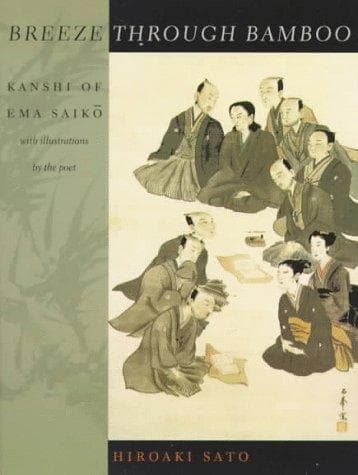
Ema Saiko (1787-1861) was a remarkably evocative Japanese poet, one of the few known woman writers of kanshi - poems written in classical Chinese. Kanshi, because it encompasses a wider range of subjects than tanka and haiku, and with its greater length, can offer richer, more sustained descriptions. Writing in this form, Saiko distinguished herself during the Tokugawa period, when composition in Chinese was largely a men's province. An exquisite painter as well as a skillful poet, Saiko followed in the great Chinese tradition of the literati-painter. A leading member of three kanshi-writing groups, Saiko counted among her friends poets, scholars, painters, physicians, and other prominent people. She used kanshi as a diary, a canvas, and a mirror, weaving observations of her friends and of simple pleasures: intoxication, reading, painting, contemplation, the excitement of trips, and the joys of evening walks. Saiko's kanshi also reflected on the changes in her life - the growth and illnesses of family members, as well as her own physical decline. Organized chronologically, these poems provide an engaging portrait of an artist's life.
Loading…
Alessandra Petrina
![The Historia vie [sic] Hierosolimitane](/_next/image?url=https%3A%2F%2Fcovers.openlibrary.org%2Fb%2Fid%2F1132446-M.jpg&w=3840&q=75)
Gilo of Paris
Alphons S. Rodrigues Pereira
Anthony Flinn
J. A. Burrow, A. J. Minnis, Charlotte C. Morse, Thorlac Turville-Petre
Susan Classen
Hua Qian, Delian Liu
Nico van den Boogert
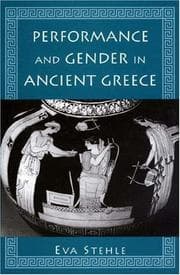
Eva Stehle
Gilo of Paris
Allchin, A. M.
Vicki Bertram