
The paradox of progressive thought
The paradox of progressive thought
David W. Noble
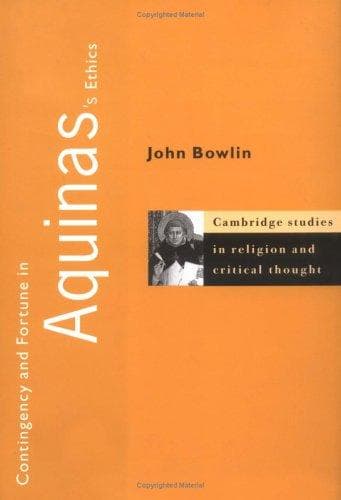
John R. Bowlin · Jan 1, 1999 · 234 pages · eng
Catalog 0.0/10
Playlogs —
In this study John Bowlin argues that Aquinas's moral theology receives much of its character and content from an assumption about our common lot: the good we desire is difficult to know in particular, and difficult to will even when it is known, because of contingencies of various kinds - within ourselves, in the ends and objects we pursue, and in the circumstances of choice. Since contingencies are fortune's effects, Aquinas also assumes that it is fortune that makes good choice difficult. And since it is the virtues that perfect choice, Aquinas finds he must treat a number of topics in light of this difficulty; the moral and theological virtues, the first precepts of the natural law, the voluntariness of virtuous action, and the happiness available to us in this life. By noting that Aquinas proceeds in this way, with an eye on fortune's threats to virtue, agency, and happiness, Bowlin places him more precisely in the history of ethics, among Aristotle, Augustine, and the Stoics.
Loading…
David W. Noble
Andrew Stewart Cunningham
Thomas A. Szlezák
1999
Nathaniel Branden

Michael Shepherd
Friedrich Niewöhner, Olaf Pluta

John L. Kundert-Gibbs
Edward E. Foster
Joseph M. Levine
James Le Fanu
Paul Lettinck