
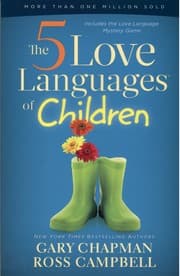
The five love languages of children
Gary D. Chapman, Ross Campbell
religious nurture in a European context
Jonathan Scourfield · Jan 1, 2013 · 239 pages · eng
Catalog 0.0/10
Playlogs —
How do we learn to be religious? To make sense of this process should we emphasize the habitual reinforcement of bodily rituals? Or the active role of individuals in making decisions about faith at key moments? Or should we turn to cognitive science to explain the universal structures on which religiosity is built? And how does a relatively devout minority pass on religion in a generally secular Western context? What significance does religion have for family life in this situation? And how does a religious identity interact with other kinds of collective identification, for example with a nation, ethnic group or a locality? These are some of the questions that Muslim Childhood deals with. This book is about ordinary British Muslims' everyday religious socialization of children in early and middle childhood. It provides a detailed description of how Muslim families in a secular Western context attempt to pass on their faith to the next generation. It is rooted in detailed qualitative research with 60 Muslim families in one British city. The authors' own analysis of survey data suggests that Muslims in the UK more effectively pass on their faith to the next generation than other religious groups. This book is in part an attempt to explain why that might be. -- Back cover.
Loading…
Gary D. Chapman, Ross Campbell

Farah Morley
Bindi V. Shah
Frankie Hambrik Capers, John Capers
Janet Heimlich
Jemima Love
Inni Kaur
Luke Bell

P. Buckley Moss, Merle Good
Nicole Wilson
M. Safr
Hope McCardy, Lisa Bastian, Brooke & Lee, Stevie Burrows