
Discourse and Dominion in the Fourteenth Century
Discourse and Dominion in the Fourteenth Century
Jesse M. Gellrich
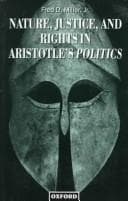
Fred Dycus Miller · Jan 1, 1995 · 424 pages · eng
Catalog 0.0/10
Playlogs —
This is a comprehensive study of Aristotle's Politics, which argues that nature, justice, and rights are central to Aristotle's political thought. Fred Miller challenges the widely held view that the concept of rights is alien to Aristotle's thought, and marshalls evidence for talk of rights in Aristotle's writings, further arguing that Aristotle's theory of justice supports claims of individual rights, which are political and based in nature. He also considers the relation of Aristotle's politics to other parts of his philosophy, in particular to the teleological view of nature in the Physics and the theory of justice in the Nicomachean Ethics. Professor Miller examines in detail the constitutional applications of Aristotle's theory, including the correct constitutions of kingship, aristocracy, and polity (based in the common advantage), and the deviant constitutions of democracy, oligarchy, and tyranny (based in the advantage of the rulers). Aristotle's treatments of revolution and property rights are also covered, and the major presuppositions of his political theory are critically examined and related to contemporary issues including the liberalism-communitarianism debate. This stimulating treatment of the Politics sheds new light on Aristotle's relation to modern political philosophy, in particular to natural rights theorists such as Hobbes and Locke. It will be of value to philosophers, political scientists, classical scholars, and anyone interested in the theoretical foundations of human rights.
Loading…
Jesse M. Gellrich
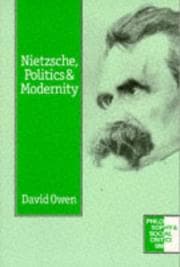
Owen, David

Steven Ungar

Tony Bennett
David Williams
John W. Harbeson, Donald S. Rothchild, Naomi Chazan
James V. Schall
Jane Bennett
K. G. Binmore
Thomas Hosuck Kang

Jürgen Habermas
Stephen K. White