
Enlightenment political thought, and non-western societies
Enlightenment political thought, and non-western societies
Frederick G. Whelan
Peace as a Means of Statecraft
James H. Herrera · Jan 1, 2009 · 18 pages · eng
Catalog 0.0/10
Playlogs —
Peace is a phrase that is often used but vaguely understood. Conventional thought considers peace as a condition that shares a dialectical relationship with war, albeit devoid of a separate nature of its own. Upon closer examination, peace has a pragmatic quality and the potential to be a separate element of statecraft, not simply the absence, termination, or continuation of war. This paper examines peace at the individual, collective, and inter-collective levels. It does so by addressing three central questions: First, how is peace defined and what is its nature? Is it a natural condition or an artificially constructed one? Second, does it differ at the individual, collective, and inter-collective levels? And third, can peace stand on its own as a means of policy relative to diplomacy and war? In essence, can peace be waged? Research reveals that a complex paradigmatic change in statecraft must occur in order to employ peace as a “shaping” and sustaining action. Further inquiry is required to fully understand its potential as a tool, one similar to “soft power.” This paper contains recommendations for the continued development of this concept.
Loading…
Frederick G. Whelan
Simone Weil
Susana Carvalho
2009
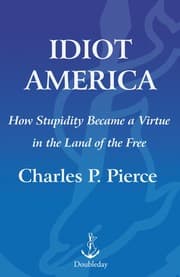
Charles P. Pierce
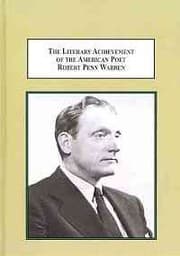
Joe E. Sarnowski
Daniel Barenboim
Matt Matravers
William Walker
Hartmut Kliemt
Timothy Quinn
L. I. T. Verlag Staff