

Common Sense
Thomas Paine, Richard Beeman
Lucia Prauscello · Jan 1, 2017 · 282 pages · eng
Catalog 0.0/10
Playlogs —
"In the Laws, Plato theorizes citizenship as simultaneously a political, ethical, and aesthetic practice. His reflection on citizenship finds its roots in a descriptive psychology of human experience, with sentience and, above all, volition seen as the primary targets of a lifelong training in the values of citizenship. In the city of Magnesia described in the Laws erôs for civic virtue is presented as a motivational resource not only within the reach of the 'ordinary' citizen, but also factored by default into its educational system. Supporting a vision of 'perfect citizenship' based on an internalized obedience to the laws, and persuading the entire polity to consent willingly to it, requires an ideology that must be rhetorically all-inclusive. In this city 'ordinary' citizenship itself will be troped as a performative action: Magnesia's choral performances become a fundamental channel for shaping, feeling and communicating a strong sense of civic identity and unity"--
Loading…
Thomas Paine, Richard Beeman
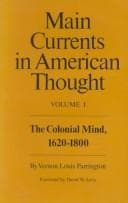
Parrington, Vernon Louis
Svetozar Y. Minkov
Domagoj Vujeva, Luka Ribarević
Saurabh Dube
Lisa Garforth
Daniel Knegt
Paul Le Blanc

Jeffrey C. Stewart

Jay Rowell
Joseph J. Ellis
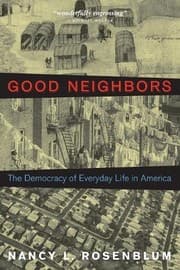
Nancy L. Rosenblum