

Thinking Ahead - Essays on Big Data, Digital Revolution, and Participatory Market Society
Dirk Helbing
religious and other radicals in the internet marketplace
Stevens, David (Lecturer in political theory) · Jan 1, 2015 · 303 pages · eng
Catalog 0.0/10
Playlogs —
The internet may be a utopia for free expression, but it also harbours nihilistic groups and individuals spreading bizarre creeds, unhindered by the risk-averse gatekeepers of the mass media -- and not all are as harmless as the Virtual Church of the Blind Chihuahua or Sexastrianism. With few entry barriers, ready anonymity and no centralised control, the internet offers wired extremists unprecedented access to a potential global audience of billions. Technology allows us to select the information we wish to receive -- so those of a fanatical bent can filter out moderating voices and ignore countervailing arguments, retreating into a virtual world of their own design that reaffirms their views. In The Devil's Long Tail, Stevens and O''ara argue that we misunderstand online extremism if we think intervention is the best way to counter it. Policies designed to disrupt radical networks fail because they ignore the factors that push people to the margins. Extremists are driven less by ideas than by the benefits of participating in a tightly-knit, self-defined, group. Rather, extreme ideas should be left to sink or swim in the internet's marketplace of ideas. The internet and the web are valuable creations of a free society. Censoring them impoverishes us all while leaving the radical impulse intact. --Provided by publisher.
Loading…
Dirk Helbing
Pollock, Philip H. III
Vikas Kumar, Jakob Svensson
Benjamin Kirshner, Ellen Middaugh
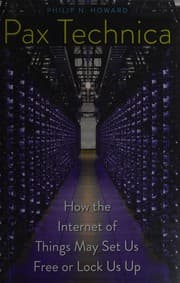
Philip N. Howard
Daniele Archibugi, Andrea Filippetti

Carrie Smith-Prei, Maria Stehle
H.W. Wilson Company.
Kalu N. Kalu
Susana Salgado

W. Todd Jarvis
Eugene D. Coyle