
Framing consciousness in art
Gregory Minissale
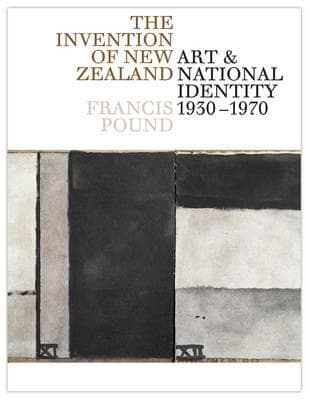
art & national identity, 1930-1970
Francis Pound · Jan 1, 2009 · 425 pages · eng
Catalog 0.0/10
Playlogs —
The invention of New Zealand is an important study of nationalism in twentieth-century New Zealand art. From the 1930s onwards, artists, writers and critics such as Toss Woollaston, Allen Curnow, Colin McCahon, Rita Angus, A R D Fairburn, Doris Lusk and Monte Holcroft deployed art, literature and theory in the construction of a national identity, the search for the essence of New Zealand and the invention of a specifically New Zealand high culture. Francis Pound ponders, decodes, memorialises and celebrates this project from its starting moment when painters and poets became newly self-conscious about New Zealand art. He argues that in the early 1970s the framework was largely dismantled and the discourse abandoned by a new generation of artists and critics, such as Richard Killeen, Ian Scott and Petar Vuletic. Over ten fascinating chapters, Pound covers the Nationalists' major concerns, their problems with antecedents, the formulation of their canon and their various co-option, adoption and rejection of Regionalism, Cubism, Modernism and Primitivism in their quest for invention.
Loading…
Gregory Minissale
Susan Harrow
Terry Fenton
Gustav Stickley
Ulrich Boser
Ziba Ardalan
Paul Meurs, Frits Gierstberg, Jaap Guldemond
James Lough, Patricia Herron
Nancy H. Yeide
Otto Olivera
W. Barnes Tatum
Giuseppe Giarrizzo, Stefania Pafumi