
A student's guide to natural science
Stephen M. Barr
David Marcus Knight · Jan 1, 2014 · 329 pages · eng
Catalog 0.0/10
Playlogs —
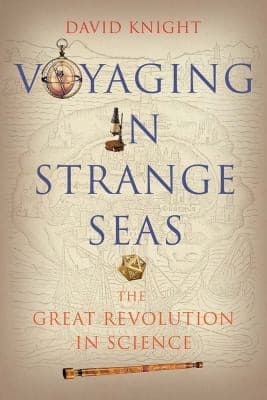
In 1492 Columbus set out across the Atlantic; in 1776 American colonists declared their independence. Between these two events old authorities collapsed, Luther's Reformation divided churches, and various discoveries revealed the ignorance of the ancient Greeks and Romans. A new, empirical worldview had arrived, focusing now on observation, experiment, and mathematical reasoning. This book takes us along on the great voyage of discovery that ushered in the modern age. The author, a historian of science, locates the Scientific Revolution in the great era of global oceanic voyages, which became both a spur to and a metaphor for scientific discovery. He introduces the well-known heroes of the story (Galileo, Newton, Linnaeus) as well as lesser-recognized officers of scientific societies, printers and booksellers who turned scientific discovery into public knowledge, and editors who invented the scientific journal. He looks at a wide array of topics, from better maps to more accurate clocks, from a boom in printing to medical advancements. He portrays science and religion as engaged with each other rather than in constant conflict; in fact, science was often perceived as a way to uncover and celebrate God's mysteries and laws. -- From publisher's website.
Loading…
Stephen M. Barr
Agustín Udías
Burns, William E.
William G. Van Der Kloot
Michael A. Hoskin
Andrew P. Wickens
Jean De
Errol E. Harris
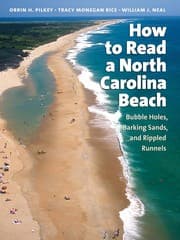
Orrin H. Pilkey, Tracy Monegan Rice, William J. Neal
Karen A. Rader
Sven Dupré, Bert De Munck, Werner Thomas, G. Vanpaemel
Kester Svendsen